The West Wind calls me home. My earliest memories are from the house we lived in on Seventh Street in the west side of town. Converted from a small grocery store, the structure was only beautiful because it was home. The essentials were there – living room, two bedrooms, kitchen, one bathroom, and a large room in the middle that had no name but served many purposes, including family dining, piano playing, and hosting neighborhood quilting bees. Sounds pretty normal but this house was anything but normal. The house had no walls, just partitions that did not extend to the ceiling. It was quite easy to climb over the partitions to get to the next room, a pastime that was as common to me as a squirrel climbing a tree; that is, if a squirrel found a chifforobe on one side and a chest-of-drawers on the opposite side. For this habit my dad nicknamed me Squirrel, an endearment he called me until his dying day.
West End was a popular place to live for those families who earned their living at the BF Goodrich Tire Plant; the locals just called it the rubber plant. My dad had worked for the company that built the plant and on the first day of tire production, he went in to work as a mechanic for Goodrich and stayed there until his retirement some thirty years later. Although the plant offered employment for many in the area, it did not provide a steady income. Before the formation of the United Rubber Workers Union, strikes were a common occurrence. We became accustomed to my dad going to work in the morning carrying his egg sandwich lunch in a paper bag only to return home within the hour because of a wildcat strike. He refused to “cross the picket line.” The formation of the union alleviated the wildcat strikes but did not prohibit union strikes during annual contract negotiations. Because of this we had no guarantee there would be any income for the next year.
The West End neighborhood was my world until the third grade. My sisters and I went to West End Elementary School; we attended West End Baptist Church; and flew our kites until dark in West End Park across the street from home. We bought groceries on credit at Tidmore’s Grocery Store and had haircuts and perms in the spare bedroom of the owner of the beauty shop around the corner. We walked to school each day and often went home from school for lunch. We attended Halloween Carnivals and went trick or treating unaccompanied by adults. In the summer we went to Vacation Bible School where we sharpened our Bible skills, memorizing verses and making aprons, a connection I have yet to figure out. Life was carefree, safe behind our unlocked doors, and the smell of the fresh cedar tree in the living room filled our Christmases. We had all that we could ask for because we were part of the West End World and it was good.
The sixty-two years since I left there have not been good to West End. The neighborhood has acquired a reputation for crime, drugs, and degradation and the residents who live there now deserve a better life. I recently attended a Zoning and Adjustment Board meeting and was “graced” with an hour-long presentation by a Florida-based consulting firm hired by the city to develop a revitalization plan for the West End area. The proposal included an extensive plan for new housing in planned subdivisions, construction of sidewalks, street lights, and commercial development with the goal of making the area a Gateway to Heaven – my words not theirs. Although the meeting was well attended by area residents, no action to adopt the plan was taken at the meeting. I hope the plan is still under consideration.
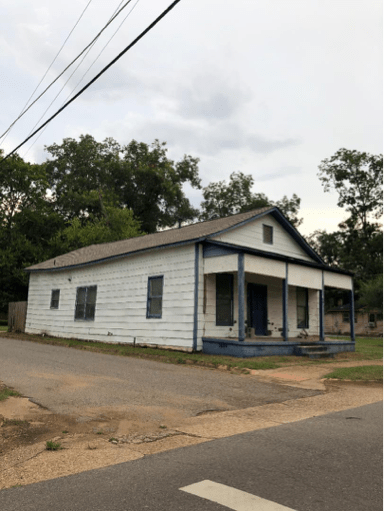
Reminiscing about my childhood enticed me to return to West End to see the house on Seventh Street. To my amazement, it is still there, abandoned and rundown; it sits there devoid of its former glory. It is somewhat smaller than I remembered, but so are the streets and the park. West End Elementary School is gone; Tidmore’s Grocery Store and many of the houses are boarded up; the merry-go-round, swings and monkey bars in the park have been replaced with safer options for children. The streets have been neglected and are riddled with potholes. The Highwaymen recorded an appropriate description that fits West End today: “It is what it is, but it ain’t what it used to be.”
At the corner of Seventh Street and Thirty-fourth Avenue, I stopped to take a picture of my childhood home. As I focused on the front porch where we ate watermelon during the summer, I thought, “Damn, we were poor and didn’t even know it.” But the west wind taught me a valuable lesson: with all the nothing we had, we had everything.
It Is What It Is– written by Stephen Bruton and performed by Johnny Cash, Willie Nelson, Waylon Jennings and Kris Kristofferson. Essential Highwaymen, Album.
 Crimsoncoco's Awesome Blog
Dolores, I’m really crying and I’m at work.
LikeLike
My sweet aunt Dolores you have written a small screen movie for me in this description of your West End. I can picture in my head all the happiness and love in that house. It trickled to 911 Homewood for sure.
Wonderful imagery!
LikeLike
I am just reading this Dolores. I absolutely love this!
LikeLike